
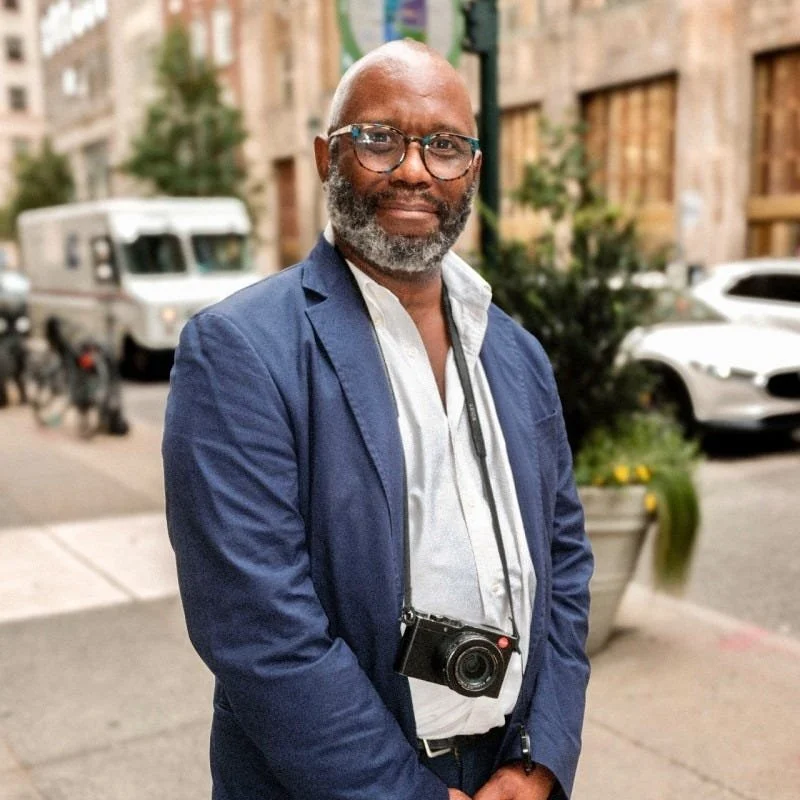
Tayyib Smith is a writer, cultural strategist, civic entrepreneur and real estate developer working at the intersection of culture, capital and place.
As a third generation Philadelphian, he has spent much of his life studying how cities decide who belongs, whose histories are preserved and who is given the opportunity to own what comes next. His work begins with a simple conviction: culture is not an accessory to economic development. It is infrastructure. It shapes identity, creates value and gives communities the power to imagine and build their own futures.
Over the past two decades, he has created organizations, spaces and public projects that connect cultural expression to economic opportunity. From two.one.five magazine, Little Giant Creative, Pipeline Philly and the Institute of Hip Hop Entrepreneurship to The Growth Collective and Smith & Roller, his practice has moved across media, entrepreneurship, civic engagement, community development and real estate.
These projects are connected by a continuing question: How can cultural attention be converted into lasting community assets, ownership and power?
That question informs his work with the Kensington Corridor Trust, Preserving Black Presence, Legacy Reclaimed: The 7th Ward Tribute, A Dream Deferred PHL and The Source of Self Regard. It also shapes his approach to transforming overlooked buildings into places where businesses, artists and communities can take root.
He writes about cities because buildings and neighborhoods are never simply physical. They are records of what we value, what we neglect and what we choose to remember. His essays examine the architecture of ownership and the policies, narratives and flows of capital that determine who benefits from changes in our built environments.
He works from inside these systems while remaining willing to question them. Across writing, development and cultural production, his aim is to help build communities where Black creativity is not merely celebrated, but supported by land, capital, institutions and enduring forms of ownership.